After a storm, hail event, or years of wear, many homeowners find themselves asking the same question: how much roof damage for insurance to replace the entire roof versus simply repairing it? Insurance companies use specific criteria to determine coverage, and understanding these factors can save you time, money, and frustration during the claims process.
What Insurance Companies Look For
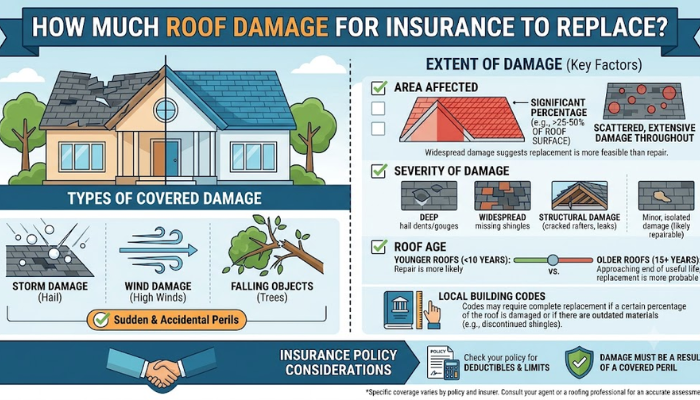
Insurers don’t approve full roof replacements for minor cosmetic issues. To determine how much roof damage for insurance to replace a roof, adjusters typically evaluate the extent, location, and cause of the damage rather than its appearance alone.
Key Factors Adjusters Consider
- Percentage of roof affected – Many policies require damage across a significant portion, often 8-10% or more, before approving replacement
- Cause of damage – Storm, hail, wind, or fire damage is more likely covered than gradual wear and tear
- Age of the roof – Older roofs may receive depreciated payouts rather than full replacement value
- Structural impact – Damage affecting decking, flashing, or underlying support increases replacement likelihood
Repair vs. Replacement: How the Decision Is Made
When Repairs Are Approved
If damage is limited to a small section, such as a few missing shingles or a minor leak, insurers typically approve repairs rather than full replacement. This keeps costs lower for both the homeowner and the insurance provider.
When Full Replacement Is Necessary
When evaluating how much roof damage for insurance to replace a roof, adjusters often approve full replacement if damage spans multiple areas, compromises structural integrity, or if repairs would cost nearly as much as replacement itself. Roofs with drainage issues, such as problems related to what scuppers are on a roof, may also require broader replacement if water damage has spread.
Documenting Damage for Your Claim
Proper documentation strengthens your case when filing a claim. Homeowners should:
- Take detailed photos immediately after damage occurs
- Get a professional roof inspection report
- Keep records of prior maintenance and repairs
- Request a written estimate comparing repair versus replacement costs
For commercial properties, understanding roofing systems, like why flat roofs are common on commercial buildings or how TPO roof sealing works, can help clarify what type of damage qualifies for replacement coverage.
Final Thoughts
Ultimately, how much roof damage for insurance to replace your roof depends on your policy terms, the extent of damage, and professional inspection findings. For more roofing insights and maintenance guidance, visit OnlyRoofing.com.
