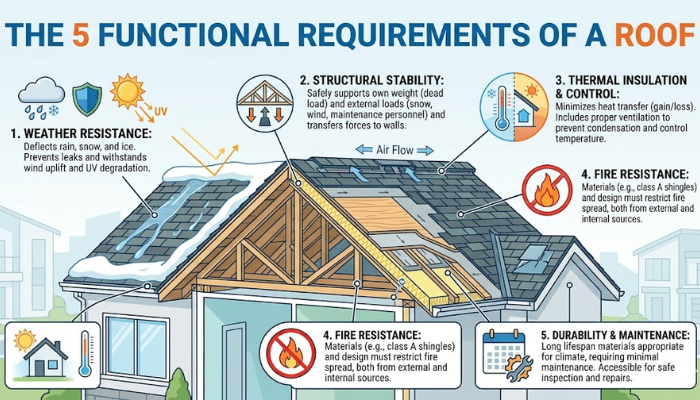
A roof is not only a covering but is a critical system. The knowledge of what are the 5 functional requirements of a roof can assist the property owner to evaluate the performance of the roof, schedule maintenance, and prevent structural problems over a long period. All roofs, no matter what material or design they have, should comply with these basic needs in order to work.
These basics can make roof assessment more productive and simple if you already have guidance from Onlyroofing.
The Five Functional Requirements That Every Roof Must Meet
A roof performs as a system. One requirement causes the other, and when there is failure in one area, then there may be broader roofing issues. The five basic functional requirements are explained below.
1. Protection From Weather and External Elements
The initial need is protection. A roof should be able to cover the building against rain, wind, snow, heat and UV rays. Roofing materials, underlayment and sealed joints are all joined together to stop the intrusion of water. The performance standards that are widely used in Commercial Roofing focus on resistance and durability.
2. Effective Water Shedding and Drainage Control
A roof should be used to push out water from the structure. Appropriate slope, drainage lapses and outline detailing avoid pooling and leakages. In the event of no drainage, moisture seeps into the system. Flashing is significant in this situation, and knowing How To Fix Roof Flashing is one of the most common failure points.
3. Structural Strength and Load Support
Roofs need to bear permanent and temporary loads. These are roofing materials, wind pressure, snow accumulation and the maintenance activity. The building should be able to safely carry weight on walls and foundations. A tendency towards sagging or cracking is frequently indicative of failure of this requirement.
4. Ventilation and Moisture Regulation
Heat and moisture in attic spaces are controlled through ventilation. Even distribution of air minimizes condensation, moulds and material deterioration. Other roof designs, like the ones that have been described in What Is A Hip Roof, have to rely on the right ventilation paths to be efficient.
5. Thermal Insulation and Energy Efficiency
A roof also controls the movement of heat. Insulation conserves the heat during winter and reduces the heat gain during summer. This enhances comfort indoors and reduces energy requirements. Proper insulation secures the roof system and living quarters.
Key Indicators of Roofing System Failure
Constant leakages, water spots, and irregular roof lines and increasing energy costs are the common signs that one or more of the functional requirements are not working properly. Timely prevention will avoid extensive harm.
What Are the Requirements of a Good Roof?
An effective roof should meet several essential requirements to provide lasting protection and performance, including strong structural support, reliable water resistance, effective drainage to prevent leaks, proper insulation, and ventilation to minimize moisture buildup over time. Selecting suitable materials suitable to the climate in which it will be located, along with proper insulation and ventilation, also plays a significant role. Compliance with safety codes, weather-resistance standards, and material-quality benchmarks, as well as proper installation techniques, secure fastenings, and suitable underlayments, is a crucial aspect of how effectively any roof performs over time. Together, these factors help determine its success or otherwise.
Conclusion: Why the Five Functional Requirements Matter
Knowing what are the 5 functional requirements of a roof would give a clear picture of roof performance. Protection, drainage, strength, ventilation, and insulation should be collaborative. With all five functions intact, the roof is longer lasting and gives the structure better protection. To get further instructions, see rooffixernearme.
