
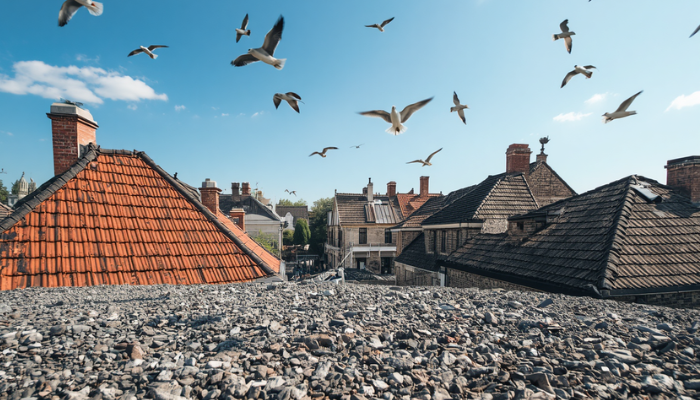
Understanding why is there gravel on roofs helps homeowners recognize the importance of built-up roofing systems and how they protect commercial and residential structures. Gravel is not just decorative—it plays a vital role in extending roof lifespan, improving durability, and reducing weather damage. In many cases, during roof replacement or roof repair, contractors inspect gravel layers to determine the underlying roof condition and performance.
When people first notice stone-covered rooftops, they often ask again: Why is there gravel on roofs, and is it necessary? The answer lies in its protective and functional properties.
Purpose of gravel on roofing systems
Why is there gravel on roofs in modern construction?
Gravel is commonly used in built-up roofing (BUR) and modified bitumen systems. It provides multiple layers of protection that improve overall roof performance.
Key reasons include:
- UV protection – Shields roofing membranes from sun damage
- Fire resistance – Adds a protective barrier against heat exposure
- Weather durability – Reduces impact from rain, hail, and wind
- Temperature regulation – Helps stabilize the roof surface temperature
- Extended lifespan – Increases the longevity of roofing materials
In commercial roofing systems managed by companies like Onlyroofing, gravel is often considered essential for long-term durability.
Structural benefits of gravel roofing
Another important aspect of why is there gravel on roofs is its ability to hold roofing layers in place. The weight of gravel prevents membrane movement and reduces the risk of uplift during strong winds. It also acts as a protective shield against mechanical damage.
Additional advantages include:
- Prevents cracking of roofing membranes
- Improves drainage when properly installed
- Reduces maintenance frequency
- Enhances energy efficiency in some roofing systems
During roof repair, contractors often reapply gravel layers to restore protective coverage and ensure structural stability.
Roofing considerations and material compatibility
While gravel roofing is effective, it must be installed correctly. In modern construction discussions, questions like Can I Use 7/16 OSB for Roof Sheathing? Often, issues arise when evaluating the strength of a roof deck. OSB can support roofing layers, but it must be properly waterproofed before installing gravel or a membrane.
Understanding why is there gravel on roofs also helps in planning upgrades or roof replacement projects, especially when switching from flat roofing systems to newer alternatives.
In conclusion, why is there gravel on roofs comes down to protection, durability, and performance. Gravel remains a trusted roofing component that effectively serves both traditional and modern roofing systems.
