
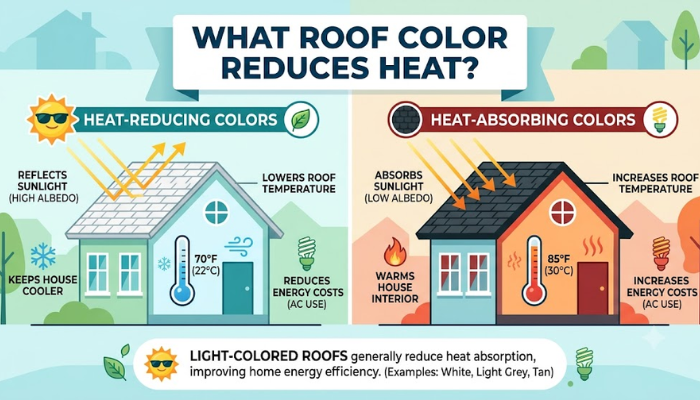
When summer temperatures soar, your roof color plays a bigger role in your home’s comfort than most homeowners realize. If you’ve ever asked yourself, ” What roof color reduces heat? — The answer has a direct impact on your energy bills, indoor comfort, and the lifespan of your roofing materials. At Onlyroofing, we help homeowners make smarter roofing decisions backed by science and experience.
How Roof Color Affects Heat Absorption
Every color on the spectrum absorbs and reflects sunlight differently. Dark colors — like black, dark brown, or charcoal — absorb more solar energy and transfer that heat into your attic and living spaces. Light colors — like white, beige, light gray, or cool terra cotta — reflect sunlight and keep surface temperatures significantly lower.
Understanding what roof color reduces heat starts with a simple principle: the lighter the color, the less heat it absorbs.
Best Roof Colors to Reduce Heat
1. White and Off-White
White is the most reflective roof color available. A white or off-white roof can reflect up to 90% of sunlight, dramatically cutting cooling costs. It’s the top choice in hot climates and pairs well with modern or Mediterranean-style homes.
2. Light Gray
Light gray offers strong reflectivity while giving your home a sleek, contemporary look. It’s a popular choice for homeowners who want to reduce heat without a stark white appearance.
3. Beige and Tan
These neutral tones reflect moderate heat and blend beautifully with natural surroundings. They’re ideal for suburban homes that need energy efficiency without sacrificing curb appeal.
4. Cool-Pigment Dark Colors
Thanks to advanced roofing technology, some darker shingles are now manufactured with cool pigment technology. These shingles reflect infrared radiation even while appearing dark to the eye, giving you aesthetics without the heat penalty.
Does Roof Thickness Play a Role?
Absolutely. Color alone isn’t enough — the structural composition of your roof matters too. A thicker, well-insulated roof deck helps regulate heat transfer even when surface temperatures rise. Onlyroofing recommends understanding what thickness of OSB is right for your roof before any re-roofing project, as the right decking thickness adds an important layer of thermal protection beneath your shingles.
Combine Color with the Right Roofing System
Choosing the right color is just the first step. To fully answer which roof color reduces heat, you also need to consider ventilation, insulation, and the overall quality of your roofing system. Explore the full range of roofing solutions and expert guidance available at Onlyroofing to build a complete heat-reduction strategy tailored to your home.
Final Thoughts
So, what roof color reduces heat most effectively? Light colors like white, off-white, and light gray lead the pack — but modern cool-pigment technology means even darker tones can now perform efficiently. Pairing the right color with proper decking, ventilation, and insulation is the winning formula. Trust Onlyroofing to help you design a roofing system that keeps your home cooler, lowers your energy bills, and keeps your roof lasting longer — season after season.
